Showing posts with label christian thinkers. Show all posts

Saturday, November 2, 2013

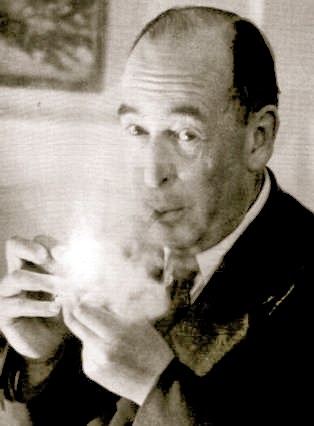
C.S. Lewis – The Priestly Professor


Any decent autobiography only begins with the story of the author’s life. Sure, there are plenty of autobiographies that tell a decent story, but only in the same way that Kipling or Stephenson can tell a decent story. If an autobiography is going to be worth anything, it really has got to say something.

There are many moment in C.S. Lewis’s autobiography, Surprised by Joy, that have stuck with me since the first time I read it—moments where, in the midst of a life’s story, something was being said, and that something represented a truth far beyond the truth or falsehood of the events surrounding them.

At some point, Lewis, remembering (though not particularly fondly) the many years at school during which he would have considered himself a sound and stalwart humanist—I time spent desperately seeking to avoid falling back into the bottomless pit of belief—observed that, “A young man who wishes to remain a sound Atheist cannot be too careful of his reading. There are traps everywhere—‘Bibles laid open, millions of surprises,’ as Herbert says, ‘fine nets and stratagems.’ God is, if I may say it, very unscrupulous.” Later, much along the same lines, he reminds his reader that: “Really, a young Atheist cannot guard his faith too carefully. Dangers lie in wait for him on every side.”

Now, Lewis should understand the feelings of atheism significantly better than I, for he experienced it, in all of inglory, from within, while the entire scope of my knowledge comes from reading and observation. From without. I would not dare complain, of course. While a Christian may, in fact, experience some tangible benefit from having experienced part of his life as an atheist, he will also have given up a perfectly good portion of time to endlessly futile pursuits. In the same way, I think there is certainly an argument to be made for a few years in prison as a character-building opportunity, but that doesn’t change the fact that going there is generally a waste of one’s time.

So I do not plan on embarking into an adventure in atheism any time soon (I am much too far gone for that), though I am grateful for a man like Lewis, who ‘took the bullet’, as it is said. He wasted years of his life so that I wouldn’t have to (comparisons to Christ here may be warranted, but I can’t help but feel that Lewis would disapprove, so I hold my tongue). He writes of time as an atheist like a spy reporting from behind enemy lines (though, in his case, an unknowing spy).

I wrote previously of Malcolm Muggeridge and G.K. Chesterton, each of whom experienced their own conversions somewhat later in life, though with Lewis it is different: He did not, as did Muggeridge and Chesterton, travel the short distance between uncertainty (or agnosticism) and belief. Experiencing a very nominal form of Christianity as a young man, which he quickly abandoned after heading out on his own, he was forced to travel the almost unimaginable difference between one firm, staunch, impenetrable belief (it would be a pity to call atheism a “lack of belief”) and another. The two might as well have stood on opposite sides of the universe. He is not the only Christian to have traversed this gulf, of course, though he is perhaps the one to have described it most beautifully (apart, one may certainly argue, from the Apostle Paul).

When Lewis writes that “a young atheist cannot guard his faith too carefully,” it means something entirely different than if I were to write the same thing, for with Lewis the truth was borne out by experience. And yet, I very much might write something similar, for the truth is one that can, indeed, observed: I have seen countless atheist individuals stumble over themselves to avoid being exposed to Christian ideas, as if they were made of poison gas, just as we have all seen atheist organizations pull out all stops in order to stop the world from being exposed to the horrors of Christian imagery. The attitude of atheism (and perhaps rightly so) has lately been one of absolute quarantine—only by preventing any exposure to the beliefs and ideals of Christians may one be made absolutely safe from them. The unwary atheist is very apt to trip over a misplaced cross and suddenly be wracked by guilt over his sin (I say this as if it were a joke, but in truth that is, often enough, not far from the truth).

Well, the joke is on them, because their attempts have never worked. The odd thing about Christianity is that, the harder it is struggled against, the more powerful it becomes, like a bacteria strengthened by penicillin. The Communists of the Soviet Union understood this well enough to ban the Bible, though they failed to ban Dostoyevski and Tolstoy, whose works are inseparable from their Christianity; and Christianity thrived in Russia. Absolutely thrived.

The point of this is that, in every way, it is the Christian who is free, while it is the humanist who must guard himself with censorship. They may be called slaves of God, but on earth they are the only ones who know freedom. Christians may read what they like without fear of being exposed to the horrors of unbelief; they may explore the truth in science while allowing for every possibility, while the humanist is restricted to the tiny little box of unbelief (it is not God’s fault that Christians often fail to understand this themselves).

Lewis, for example, made the tragic mistake, while still an atheist, of reading Chesterton (he was young and unprepared and did not guard his atheism as well as he, perhaps, should have). “Then I read Chesterton’s Everlasting Man,” he writes, “and for the first time saw the whole Christian outline of history set out in a form that seemed to me to make sense. Somehow I contrived not to be too badly shaken. I already thought Chesterton the most sensible man alive ‘apart from his Christianity.’ Now, I veritably believe, I thought – I didn’t of course say; words would have revealed the nonsense—that Christianity itself was very sensible ‘apart from its Christianity.’”

Reading Lewis—particularly his allegorical novels and many of his essays—one can understand quickly what he appreciated about Chesterton. It was the unique and astonishing tension (but not contradiction) between the academic and the fantastic; between reason and myth, history and poetry. It was a Christianity that could be reasonably defended—logically, historically, scientifically—but at the same time a Christianity that set itself as a fixture within the soul—the seat of myth and fantasy. In Christianity, one has the freedom to look at Lewis’ Narnia books and proclaim, without hesitation or qualification, that they ought to be seen as works of non-fiction; that they might find a better home in the “History” section of the library than in “Children’s Fiction”, for hidden within their stories is a history of the world that carries far more truth than Gibbon or Herodotus, and far deeper insight into true humanity than Kant or Descartes.

But before he would ever come to write these books (and many others), Lewis struggled mightily against the pull of Christianity; he felt, to use a phrase borrowed from Francis Thompson’s poem, that he was being pursued relentlessly by the Hound of Heaven.

Thompson knew the struggle well:

I fled Him, down the nights and down the days;
I fled Him, down the arches of the years;
I fled Him, down the labyrinthine ways
Of my own mind; and in the mist of tears
I hid from Him, and under running laughter.
Up vistaed hopes I sped;
And shot, precipitated,
Adown Titanic glooms of chasmèd fears,
From those strong Feet that followed, followed after.

Lewis’s own story is, primarily, the story of his flight and of his internal struggle; a fierce battle with the truth that was welling up inside him. It is a strange thing, the atheist who is compelled toward Christianity, for with every last gasp he will cry out that he is only fighting to preserve truth, to preserve reason; that he is fighting, facts against faith, when in actuality he knows (else he would not be fighting) that they are fighting against truth rather than for it (or there would be no struggle). Further, it is only by faith that the atheist may to ignore the truth and remain an atheist—but only the worst, blindest sort of faith, the sort that allows one to hold fast to some ideal, even if a greater, truer ideal has presented itself. It is something far different from the faith of the Christian.

Lewis’s own journey culminated, of course, in his eventual conversion. Little by little the truth chipped away at the walls of protection he had built up around himself, until at last they crumbled. But it was not, as are so many superficial, temporary conversions of today, a matter of a momentary decision, where one is stopped suddenly in their tracks. Nor was it particularly dramatic. No, it was far too genuine for that.

“I was driven to Whipsnade one sunny morning,” Lewis wrote of the first moments of his new life. “When we set out I did not believe that Jesus Christ is the Son of God, and when we reached the zoo I did. Yet I had not exactly spent the journey in thought. Nor in great emotion. ‘Emotional’ is perhaps the last word we can apply to some of the most important events. It was more like when a man, after long sleep, still lying motionless in bed, becomes aware that he is now awake. And it was, like that moment on top of the bus, ambiguous.”

It is telling that Lewis should have titled his autobiography Surprised by Joy, for this is precisely the thing that can only be understood by someone after discovering Christianity. It was, in part, an intellectual understanding that began Lewis on his path to religion, and a reasonable, sensible, logical sort of faith. He accepted its truth because he realized that it was true; not, particularly, because of the good it would do for him. Lewis would remark later that it is a grave mistake to become a Christian believing that it will make life easier; one believes in Christ because of His truth. That being said, what Lewis discovered in Christianity, after the Hound of Heaven had caught up to him after all, was that, despite the difficulties, despite the requirements, despite being made into a servant of God, Christianity means true, lasting joy.

“I call it joy,” he wrote, “which is here a technical term and must be sharply distinguished from both Happiness and from Pleasure. Joy (in my sense) has indeed one characteristic, and one only, in common with them; the fact that anyone who has experienced it will want it again. Apart from that, and considered only in its quality, it might almost equally well be called a particular kind of unhappiness or grief. But then it is a kind we want. I doubt whether anyone who has tasted it would ever, if both were in his power, exchange it for all the pleasures in the world. But then Joy is never in our power and pleasure often is.”

Lewis knew well that what he found in Christ was the same that Thompson had foreseen as he concluded his poem, as at last God catches up to the Prodigal and offers him a word of comfort:

“All which I took from thee I did but take,
Not for thy harms,
But just that thou might'st seek it in My arms.
All which thy child's mistake
Fancies as lost, I have stored for thee at home :
Rise, clasp My hand, and come !”
Halts by me that footfall :
Is my gloom, after all,
Shade of His hand, outstretched caressingly?
“Ah, fondest, blindest, weakest,
I am He Whom thou seekest !
Thou dravest love from thee, who dravest me.”

The fundamental appeal I have felt toward Lewis’s theology, which he espoused again and again in form after form after coming to Christianity, is similar to that which draw me toward Chesterton and Muggeridge, and that is its devotion toward truths that are universal; ideas that might be capable, if taken seriously, to unite Christendom at last. It wasn’t as if Lewis wasn’t himself part of a particular sect of Christianity (he was a devout Anglican, much to the dismay of his friend, J.R.R. Tolkien, who hoped that he would become a Catholic), but as he wrote, he wrote of truths unquestionable. Whether in his apologetic works (Mere Christianity stands almost alone among 20th century explanations of God, while The Problem of Pain is a beautiful take on a particularly vexing question), his allegorical stories (The Great Divorce, The Screwtape Letters, Till We Have Faces) or his more straightforward theological works (Refletions on the Psalms, The Four Loves, The Weight of Glory), the true beauty, the true joy, is that the truths are primary. Lewis expresses the core principles of Christianity, without being bogged down by sectarian nonsense.

(it deserves note here that, as he grew in stature as a Christian writer, he continued to hold a chair in Medieval and Renaissance Literature at Cambridge University; it is fair to say that today’s universities would surely never stand for such a conflict of interests)

The root of Lewis’s mainstream popularity is due in part to his highly accessible works—particularly The Chronicles of Narnia, Mere Christianity and The Screwtape Letters. Like Chesterton, however, it is not difficult to argue that at least part of Lewis’s longevity may be attributed to the fact that the pages he composed are filled—at times over-filled—with perfectly composed phrases that almost seem made to be removed and used elsewhere (some Lewisisms, such as, “Someday you will be old enough to start reading fairy tales again,” sounds suspiciously like something Chesterton himself would have said). It is almost as if one could tear apart his books, sentence by sentence, and then put them back together in a different order, without losing the heart of his ideas. He is, in short, endlessly quotable—enough so that one is likely to forget that the many phrases for which he is famous are perhaps even more powerful in their original contexts.

Words, Lewis knew, carry the potential for power greater than any wizard’s wand or witch’s cauldron if wielded rightly. God, after all, was in no way stingy when he chose the languages of men as a means of revelation. It was no accident that the scripture came down to us as a book. Words are often the weakness of men—they have a way of finding their way into the soul—and Lewis, better than most, wielded the weapon rightly; in part, because he had come to truly understand the lostness of man and the stark disparity between the kingdoms of God and man.  

Indeed,” he wrote in one of the most enduring passages from The Weight of Glory, “if we consider the unblushing promises of reward and the staggering nature of the rewards promised in the Gospels, it would seem that Our Lord finds our desires, not too strong, but too weak. We are half-hearted creatures, fooling about with drink and sex and ambition when infinite joy is offered us, like an ignorant child who wants to go on making mud pies in a slum because he cannot imagine what is meant by the offer of a holiday at the sea. We are far too easily pleased.”

Wednesday, October 30, 2013

G.K. Chesterton: Vendor of Words

When one begins to read the works of G.K. Chesterton, the first impression is that the man has a way with words. If anyone claims any other first impression, it might very well signify that the person has not yet learned to read, for this much, at least, is obvious even to those who fervently disagree with him—who might claim that his competency masks his ignorance. He was the master, so it is said, of the epigram. He possessed the uncanny ability to take almost any phrase, turn it on its head, and make it dance; to take any idea, no matter how prosaic, and turn it to poetry. If a debate over some great issue ever turned into nothing more than a battle of clever phrase-turning (which, in fact, seems to be the case much of the time), there is little doubt that Chesterton would come out looking very large (pun very much intended, for Chesterton was a famously massive individual, both in terms of girth and in literary accomplishment), while making his opponent, or his opponent's ideas, seem very, very small.

While there is certainly something admirable about Chesterton's way with words, a certain clarification must be made: There is a very real difference between an accomplishment with words and an accomplishment of ideas, just as there is a difference between the concrete and the abstract. If there was no such distinction, I might be just as influenced in my ideas by Shakespeare, Shaw or Wilde as I am by Chesterton. But as much as Chesterton's ability to string together a fanciful sentence makes his words eminently readable, it is the heart of his ideology that make his words worth reading in the first place. Words may have some value on their own, but no words are more lasting than those that convey something true. This is why no mere nursery rhyme will ever have the lasting value of the Psalms, just as no romantic novel will ever compare to the Song of Solomon.

There are far more than words in many of Chesterton's works (I cannot say for certain that this holds true universally, as I'm not certain that even Chesterton has read his complete works; and the prolific nature of his writing certainly led to the occasional worthless essay or droning novel, worth little more than the paper on which it was printed). Hidden beneath the clever sentences and the endless epigrams is something missing from most eminent writers: there are often very real (and very consistent, which is no small achievement) ideas. Very important ideas.

There is nothing superficial, for example, about the steady progression of logical and reasonable leaps that make up Chesterton's seminal apologetic work, The Everlasting Man, which uses anthropology and history to show the futility of humanism. There is far more within the pages of Orthodoxy than clever sentences. 

Even much of his fiction is founded very much on truth, for one of the underpinnings of Chesterton's entire philosophy was that there was often more truth found in myths and fantasies than in “proper” history, for in fantasy the truth of the soul is revealed, while a book of history only says anything about a person's ability to perform some research. There is something truly human in fiction—even the most fantastic fiction—that is necessarily absent from even the most accomplished work of history. I, for one, have probably found far more value and inspiration in Chesterton's little-remembered novel The Ball and the Cross than from any work of theology. 

The Ball and the Cross is, in part, a work of pure fantasy, opening with a fanciful scene of a futuristic flying machine, driven by a demon, soaring over the streets of London and ends with the dramatic rescue of an angelic being from an insane asylum. There is never a sense that the events of the story are anything but an allegory, and yet, as is the hallmark of any good allegory, one cannot help but believe every word. Between these fantastic bookends is the story of two men, a devout Christian and a devout atheist, whose attempts to kill one another over their ideological differences leads to a tremendous friendship and the realization that the true enemy is a world that no longer cares; a message that has never stopped resonating. It is as searing an indictment against the apathy of our present world as against that of 19th century London.

Not to be ignored are Chesterton's Father Brown stories and perhaps his most well known novel, The Man Who Was Thursday. The larger and more lasting themes of these works may be less overt, but they are there, certainly, hiding just beneath the wit and cleverness of the words.

It is fair to wonder why I should mention so much about Chesterton’s works and so little about his life or personality. When I wrote previously about Malcolm Muggeridge I wrote almost exclusively about his story and what it meant to his theology. The reason is simple: When I consider Muggeridge, it is as a man inseparable from his life; his theology was a direct result of the events that shaped them. With Chesterton, there is certainly a life there—and an interesting one—but when I think of Chesterton I do not think of his life; I think of his words.

Still, there are many similarities between Muggeridge and Chesterton, which others have described at length. Both were British. Neither was raised in a particularly religious home, both, after accepting the truths of Christianity, began as Protestants and later converted to Catholicism. Both were inveterate journalists, making their living as "Vendors of Words." Chesterton died before he had reason to know anything of Muggeridge though it is fair to say that Muggeridge was, at least in part, influenced by Chesterton (though his reviews of Chesterton’s works are often quite mixed). “The only time I ever saw him in the flesh,” Muggeridge wrote, “he was seated outside The Ship Hotel at Brighton shortly before he died. His canvas chair looked preposterously small, as did a yellow-covered thriller he was reading. It was a windy day, and I half-expected him to be carried away. Though so huge, he seemed to have no substance: more a balloon than an elephant.”

Muggeridge would have been the first to note that the differences between he and Chesterton were stark (though, somehow, without being contradictory): Muggeridge was, even at his wittiest moments, almost endlessly solemn, while Chesterton could make light of even the most serious of issues (as is evident in his book Eugenics and Other Evils). Muggeridge excelled in taking the things that humanity finds great—governments, pleasures, wealth—and made them appear very small and worthless, for he knew that all earthly kingdoms pales in comparison to the Kingdom of God, while Chesterton considered things that were seemingly small and insignificant and made them appear very big and important. 

The most perfect example of this tendency—which permeates almost all of his writings—is found in the collection of essays known, appropriately, as Tremendous Trifles. Chesterton explores all sorts of seemingly mundane things and shows his readers that they are really very important, for in them one can discover great truths, both about men and about God.

On trying to purchase a piece of brown paper on which to draw, he writes: “I then tried to explain the rather delicate logical shade, that I not only liked brown paper, but liked the quality of brownness in paper, just as I liked the quality of brownness in October woods, or in beer, or in the peat-streams of the north. Brown paper represents the primal twilight of the first toil of creation, and with a bright-colored chalk or two you can pick out points of fire in it, sparks of gold, and blood-red, and sea-green, like the first fierce stars that sprang out of divine darkness.”

On the inviting prospect of drawing on his ceiling while lying in bed, he writes: “Nowhere did I find a really clear place for sketching until this occasion when I prolonged beyond the proper limit the process of lying on my back in bed. Then the light of that white heaven broke upon my vision, that breadth of mere white which is indeed almost the definition of Paradise, since it means purity and also means freedom. But alas! Like all heavens, now that it is seen it is found to be unattainable; it looks more austere and more distant than the blue sky outside the window. For my proposal to paint on it with the bristly end of a broom has been discouraged—never mind by whom; by a person debarred from all political rights—and even my minor proposal to put the other end of the broom into the kitchen fire and turn it into charcoal has not been conceded... I am sure that it was only because Michelangelo was engaged in the ancient and honourable occupation of lying in bed that he ever realised how the roof of the Sistene Chapel might be made into an awful imitation of a divine drama that could only be acted in the heavens.”

This was all meant, obviously, in good humor—for Chesterton was tremendous at making light of things while at the same time ensuring that the world is loved and seen as the brilliant place it is. His purpose, always, was to remind his readers that: “The world will never starve for want of wonders; but only for want of wonder.” This is where Chesterton’s theology begins and ends: with hope and happiness and the knowledge that this place, as the creation of God, does not merely offer the occasional miracle, but is, in itself, one endless miracle that goes, far too often, overlooked. That is the truth that he was endlessly revealing through his words.


The same joy and wonder he found in the world around him, Chesterton found ten-fold in the person of Christ. Chesterton realized that Christianity is not, as so many have said, a religion of woe or mourning. It is not a religion that makes one dwell on their sins or compels them to reject all earthly pleasures. “Joy,” he begins the closing passage of Orthodoxy, “which is the small publicity of the pagan, is the gigantic secret of the Christian. And as I close this chaotic volume I open again the strange small book from which all Christianity came; and I am again haunted by a kind of confirmation. The tremendous figure which fills the Gospels towers in this respect, as in every other, above all the thinkers who ever thought themselves tall. His pathos was natural, almost casual. The stoics, ancient and modern, were proud of concealing their tears. He never concealed His tears; He showed them plainly on His open face at any daily sight, such as the far sight of His native city. Yet He concealed something. Solemn supermen and imperial diplomats are proud of restraining their anger. He never restrained His anger. He flung furniture down the front steps of the Temple, and asked men who they expected to escape the damnation of Hell. Yet He restrained something. I say it with reverence; there was in that shattering personality a thread that must be called shyness. There was something that He hid from all men when He went up a mountain to pray. There was something that He covered constantly by abrupt silence or impetuous isolation. There was some one thing that was too great for God to show us when He walked upon our earth; and I have sometimes fancied that it was mirth.”   

Tuesday, October 22, 2013

God’s Spies


It’s been two thousand years (or very near it) since the final words of the New Testament were penned. Two millennia since the canon was closed, since the final inspired words of God were given to men. But what has happened in the meantime? Has God stopped speaking to and through the words of men? Have the last of God’s prophets walked the earth? Are the last messengers of the wisdom of God gone and buried in forgotten tombs?

Quite frankly, I don’t think so.

Malcolm Muggeridge spoke to this point beautifully in the collection of essays (which were really transcriptions of television specials he had written) he called A Third Testament. Muggeridge did not believe that the work of God had ended with the closing of scriptures, but that He had proceeded to send spies into the world; spies whose words, if not the living breathing Word of God Himself, offered man a taste of the divine. “In the case of the Old Testament Jews,” Muggeridge wrote, “it was the prophets who thus called them back to God - and when were there more powerful and poetic voices than theirs? Then came the New Testament, which is concerned with how God, through the Incarnation, became His own prophet. Nor was even that the end of the prophets and testaments. Between the fantasies of the ego and the truth of love, between the darkness of the will and the light of the imagination, there will always be the need for a bridge and a prophetic voice calling on us to cross it.”

Muggeridge focused on seven figures who had shaped his own understanding of God; men who, though not producing scripture per se, “had a special role in common, which was none other than to relate their time to eternity. This has to be done every so often; otherwise, when the lure of self-sufficiency proves too strong, or despair too overwhelming, we forget that men need to be called back to God to rediscover humility and with it, hope.”

Muggeridge’s list of “Third Testament” prophets (by no means complete) consisted of Augustine of Hippo, Blaise Pascal, William Blake, Leo Tolstoy, Fyodor Dostoyevsky, Soren Kierkegaard, and Dietrich Bonheoffer. Muggeridge called them ‘God’s spies’, for there was something secretive and subversive, something cloak-and-dagger, about their methods. Whether it was Pascal, who gained great fame as an eminent scientist before pursuing his far greater love of Christian apology; Tolstoy and Dostoevsky, who secreted spiritual truths into their beloved writings, which kept spirituality alive in Russia, even as Bibles were being banned; Kierkegaard, who sought to reform the church under the guise of pure philosophy; or Bonheoffer, who quite literally carried the word of God into the heart of the enemy camp, accepting death at the hand of the Nazis as consequence for his subterfuge.

If I was to make my own list, what would it look like? Which voices has God used most readily to draw me closer to eternity; to give me hope and understanding, to supplement and enhancing His living word?

It is a fair question—and an important question—though it seemed overwhelming at first. There is really no shortage of clear and compelling Christian writers in the world, many of whom have influenced my thinking very directly. But, as I have considered the question, a few obvious suspects have stood out. One need only look at the things I have written and notice that there are some voices that are quoted far more often than others, evidence that their ideas and their ways of putting things have somehow resonated within me.

As I have read Muggeridge’s portraits of those whose words have inspired him, I was (as was certainly his purpose) moved to discover them for myself. My reasons here are really the same—I hope to encourage others to seek these men out and to find inspiration from them first-hand, rather than as a byproduct of the influence they have had on me. These men are far more than the quotes I have stolen from them, their ideas are far deeper than their witticisms (with the possible exception of G.K. Chesterton, whose ideas may be exactly as deep as his witticisms, but only because his witticisms are unusually deep); but it is the quality of their writing as much as the quality of their thoughts that has allowed them to stand above others in my mind.

It should be no surprise that I should begin my list with Muggeridge himself, who would never have been so vain as to include himself on his own list of modern day prophets. Indeed, I would consider him perhaps the most influential on my notions of apologetics, though he would have scoffed at the notion of being called an apologist, just as he would have laughed at the idea that he was a theologian. The glorious truth of Malcolm Muggeridge was that he was honest about the endless troubles of his own life. When, very late in life, he finally found his way to Christianity, he realized that, in his unflinching honesty, he had really been writing about God all along, without knowing. One may look at Muggeridge’s words long before he accepted the truth of Christianity and discover that, miraculously, the evidence for God is everywhere.

G.K. Chesterton, on the other hand, was significantly more self-aware of his own purposes and methods. Where Muggeridge wrote at length of his own intimate experiences in search of God, Chesterton’s method forged an endless broadening of ideas that had once been seen as narrow. He delved at length into fiction and fantasy—in fact, even his most serious works are not immune to grand flights of fancy. Where Muggeridge saw the entirety of his life as worthless, wasted effort, for he had, for too long, been searching for fulfillment outside of God, Chesterton had the uncanny ability to discover God even in the most trivial things. Muggeridge’s apologetic is practical, Chesterton’s was almost endlessly ethereal. But though they may be (in some respects) opposites, they are certainly not opposed; they are, in fact, almost perfectly complementary.

C.S. Lewis, certainly the most popular name on my list, forged path somewhere in between those of Muggeridge and Chesterton. Like Muggeridge, much of his greatest explanations of faith come from telling his own story.  Both men came to faith only after a lifetime fleeing, as Francis Thompson described, from the Hound of Heaven. Neither men were seeking God—both did everything in their power to escape Him. And yet both were found. However, like Chesterton, Lewis also had a flare for the fantastic, which he thought complemented the down-to-earth. Lewis’ writing, like Chesterton’s, also conveys a striking gift for turning a phrase; producing streams of endlessly quotable (and supremely logical) observations on man and his need for God.

Soren Kierkegaard is the one name in which my brief list overlaps with Muggeridge’s, but I simply couldn’t help it. Kierkegaard is, I think, a true outlier on this list for many reasons. Kierkegaard was a strange, peculiar character, whose personal qualities may be seen as either amusing or frightening. Though he is popularly considered a Christian existentialist, for all practical purposes he was more of a Christian eccentric. Among the men I have mentioned, he is certainly the most purely philosophical, and while much of his writing is, as a result, intimidatingly dense, he benefited from strange and exciting moments of perfectly clarity. Kierkegaard stood alone among his fellow philosophers in that he was constantly pitting Christianity against philosophy, only to discover that it was Christianity that always survived the encounter. Like Muggeridge, Chesterton and Lewis, Kierkegaard fought, not just for Christian ideas, but for real Christian living, which set all of them apart from mere theologians of philosophers.

There are others, of course. “...we may be sure,” Muggeridge concluded, “that other spies have been briefed and posted. It would be foolish even to speculate on their identity and whereabouts. One thing is certain, though: whoever and wherever they may be, great services will be required of them and great dangers encompass them.” Still speaking and writing today, and still inspiring believers and stupefying skeptics, there is Ravi Zacharias, William Lane Craig, Hugh Ross, Lee Strobel, John Piper, and countless others who continue to bring the freedom to the gospel to the minds of the world, whether by means as traditional as a sermon on Sunday or through a scientific lecture or public debate. But in the posts to come I will focus, not on the voices of today, but on these four men of the past 150 years, whose lives are absolutely inseparable from their work; whose writings deserve to be added to the pantheon of modern day prophecy.

I will begin, in the post to follow, with Muggeridge, a metaphorical spy of God in a spiritual battle, and a very literal spy of the British Empire in the midst of war.